URI NIR | RUMOR |BEIT MARS | 158 HERZL ST. TEL AVIV | JAN-FEB 2026 | PARASITE PROJECT
-
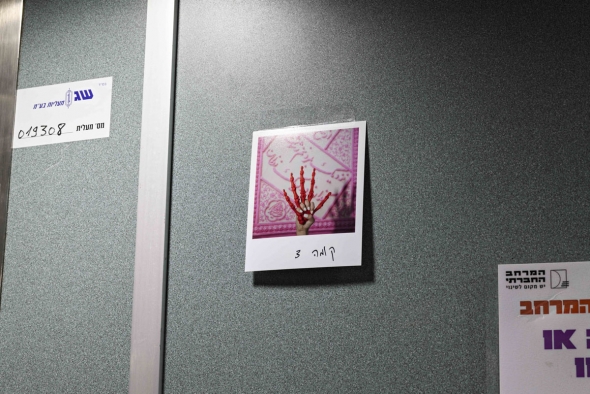 Installation view, Beit Mars
 -
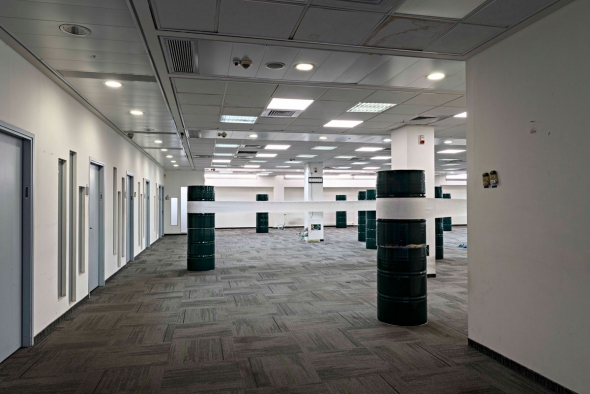 Installation view, Beit Mars
 -
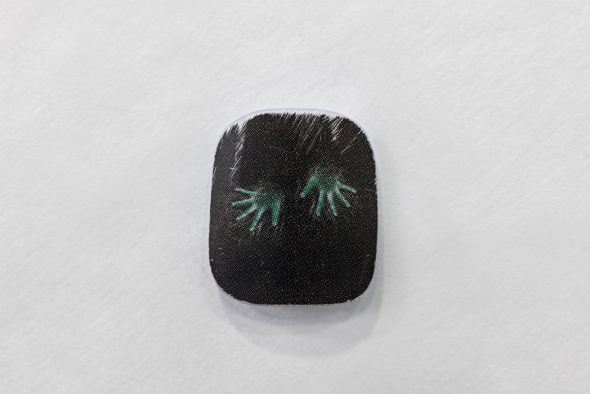 Installation view, Beit Mars
 -
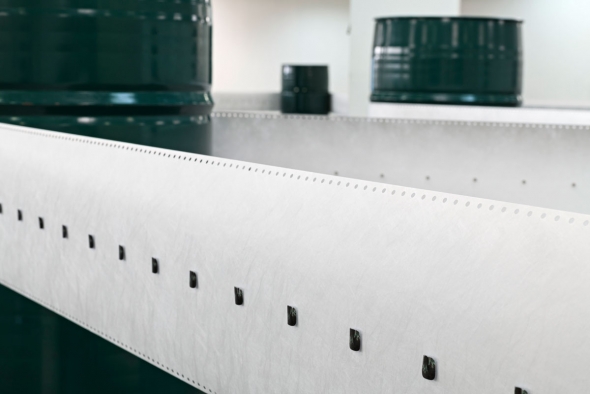 Installation view, Beit Mars
 -
 Installation view, Beit Mars
 -
 Installation view, Beit Mars
 -
 Installation view, Beit Mars
 -
 Installation view, Beit Mars
 -
 Installation view, Beit Mars
 -
 Installation view, Beit Mars
 -
 Installation view, Beit Mars
 -
 Installation view, Beit Mars
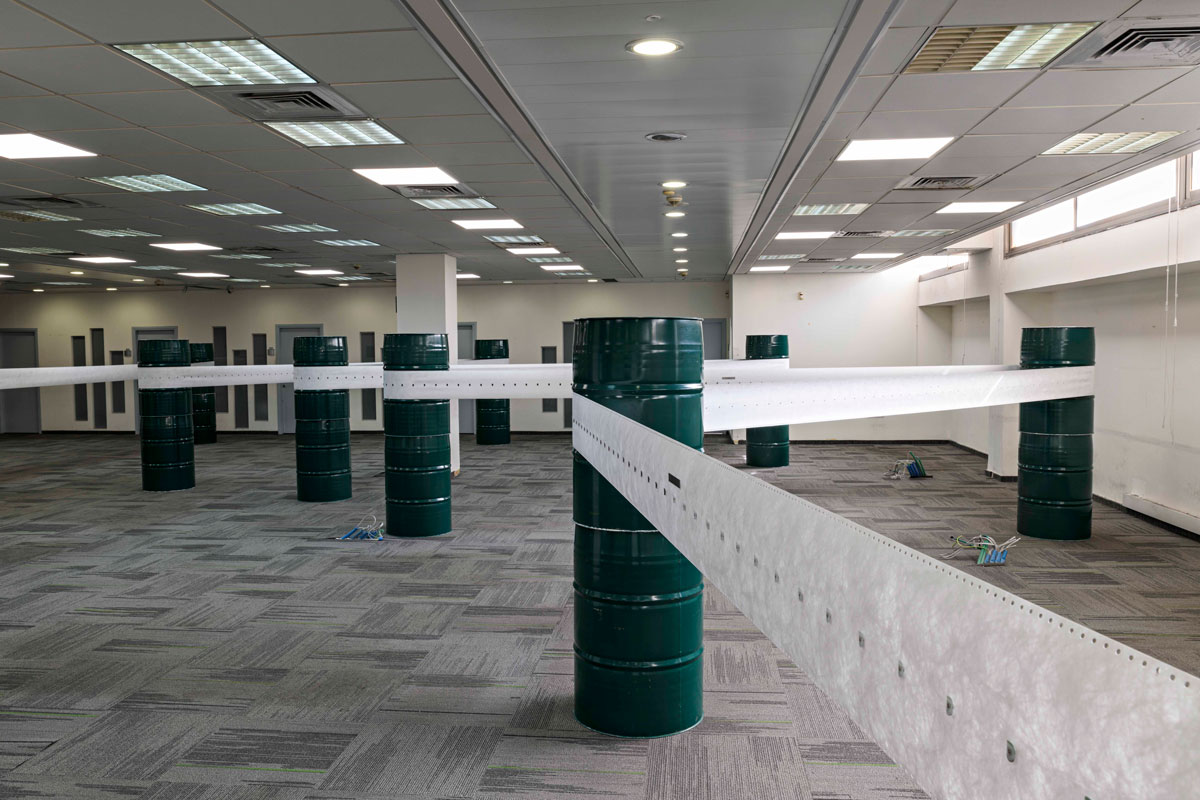
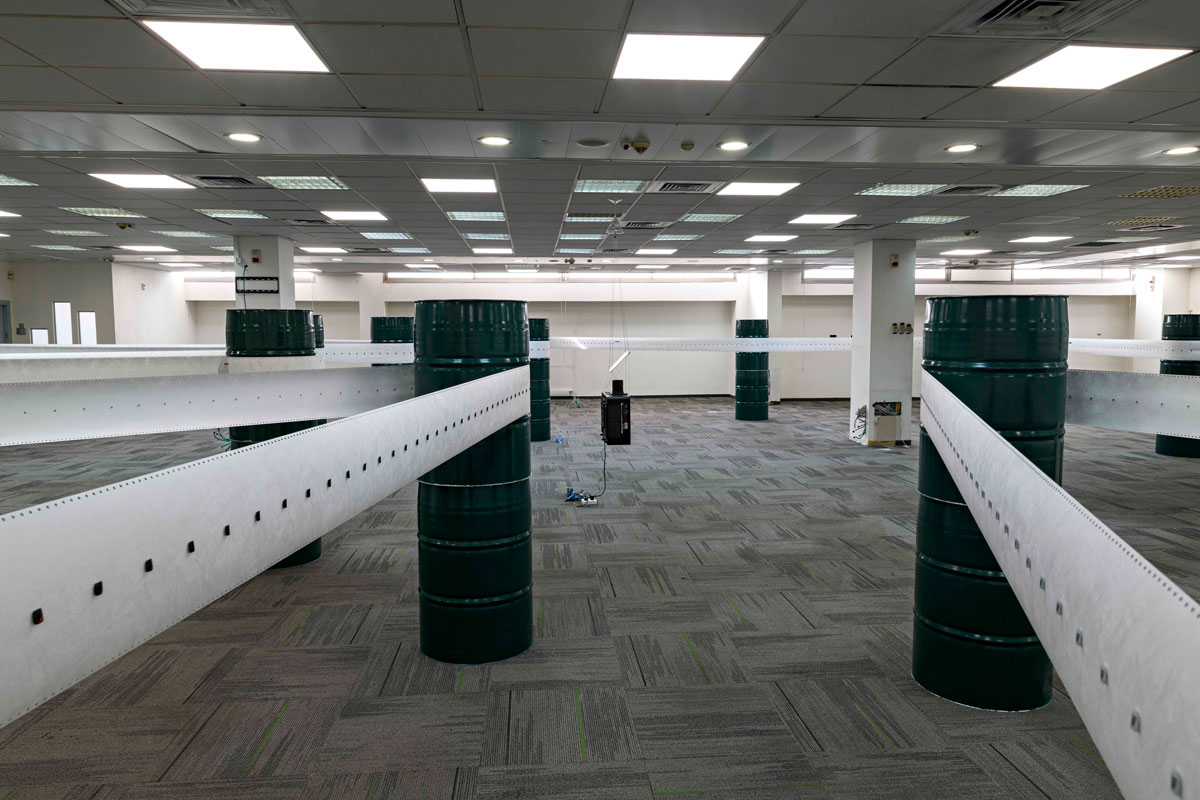
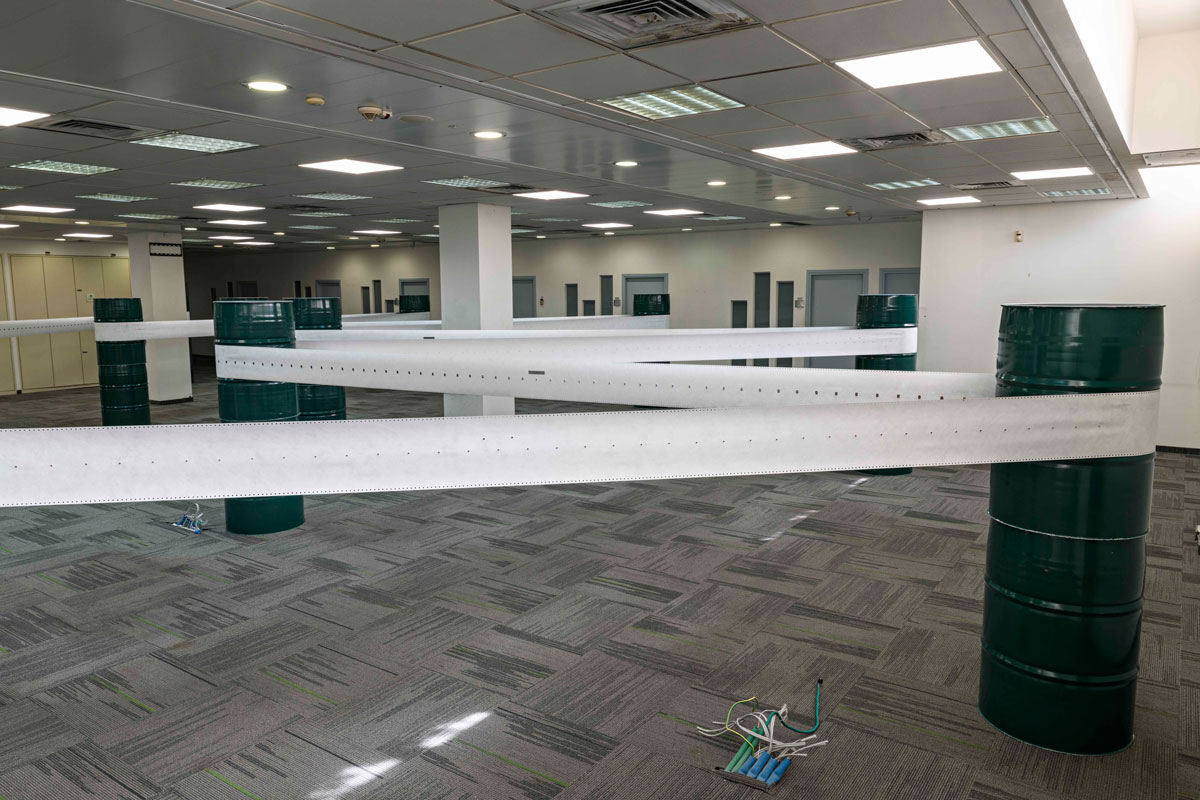
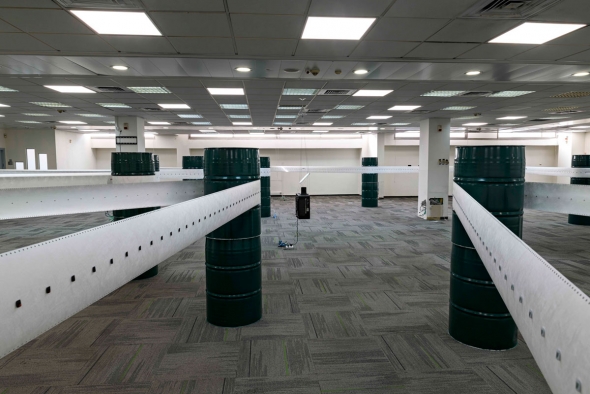
Rumor is not an independent exhibition, as much as a link between two exhibitions: Room Laughter, which was presented in two parts, and Yours, Knuckleduster—a future exhibition whose plan was conceived years ago yet postponed by the war due to excessive ostentation.
Rumor offered religious compensation for ostentation: pettiness that paves a long road.
It features the same kind of paper from the diving printer used in Room Laughter and Arabic once again appears as an enormous deficit of understanding, for which it compensates with an excess of labor and meticulousness.
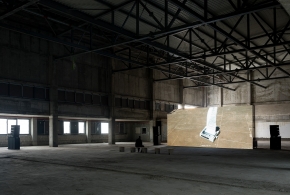
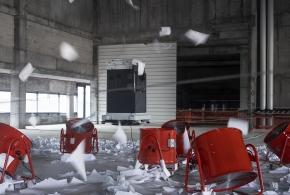
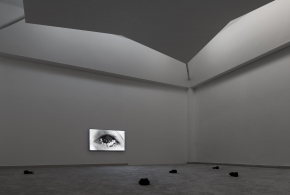
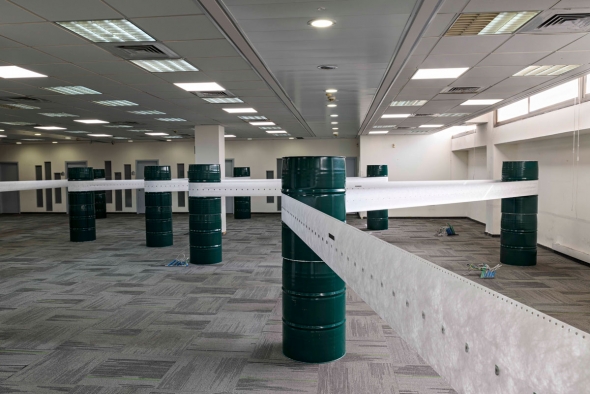
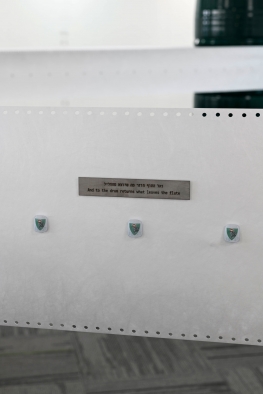
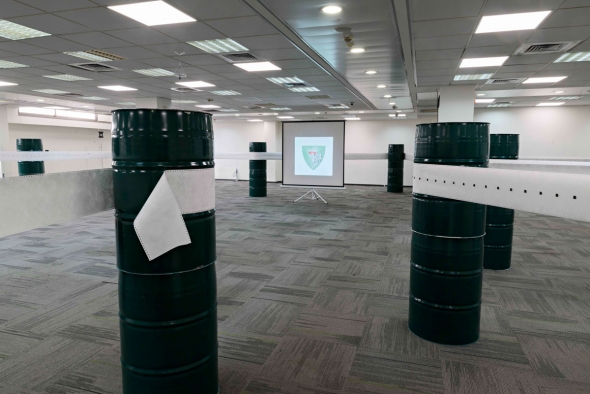
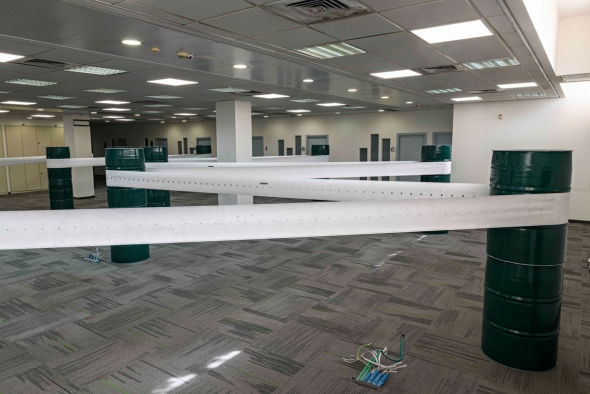
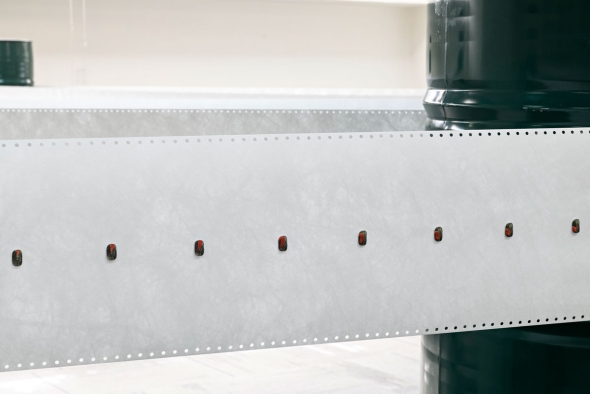
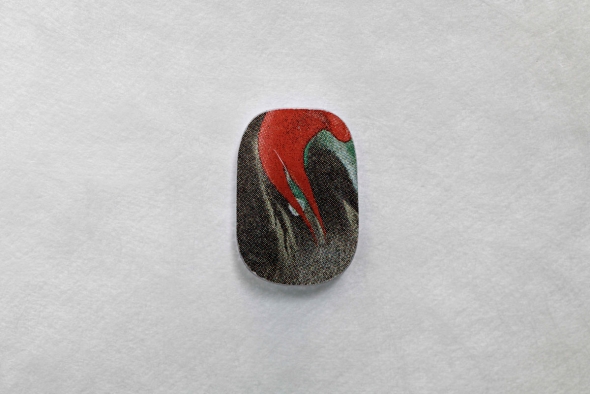
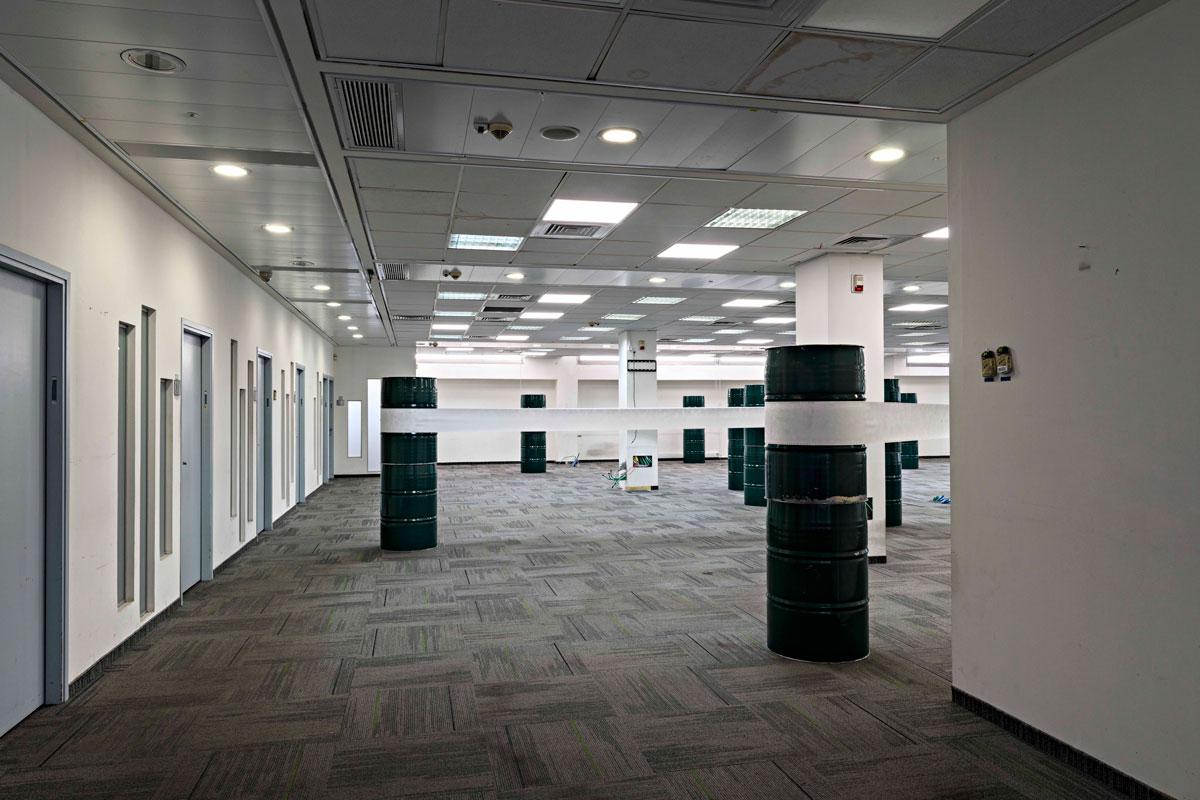
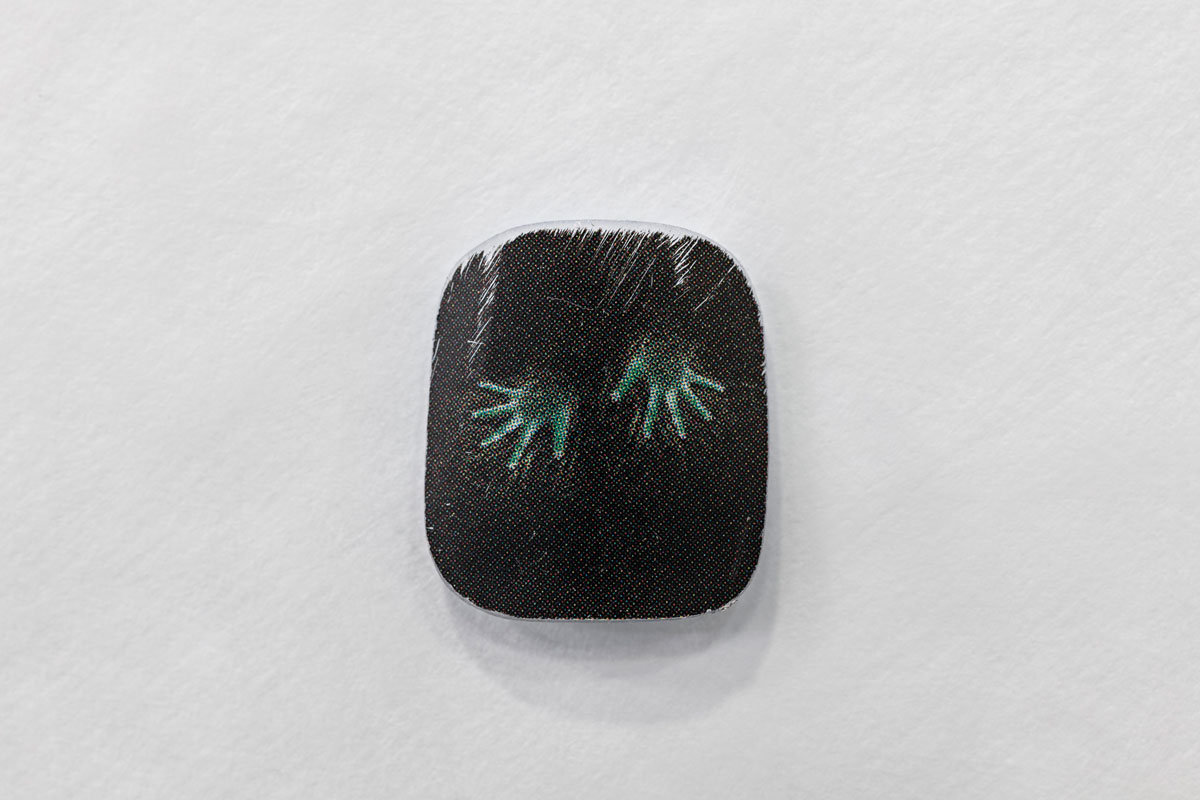
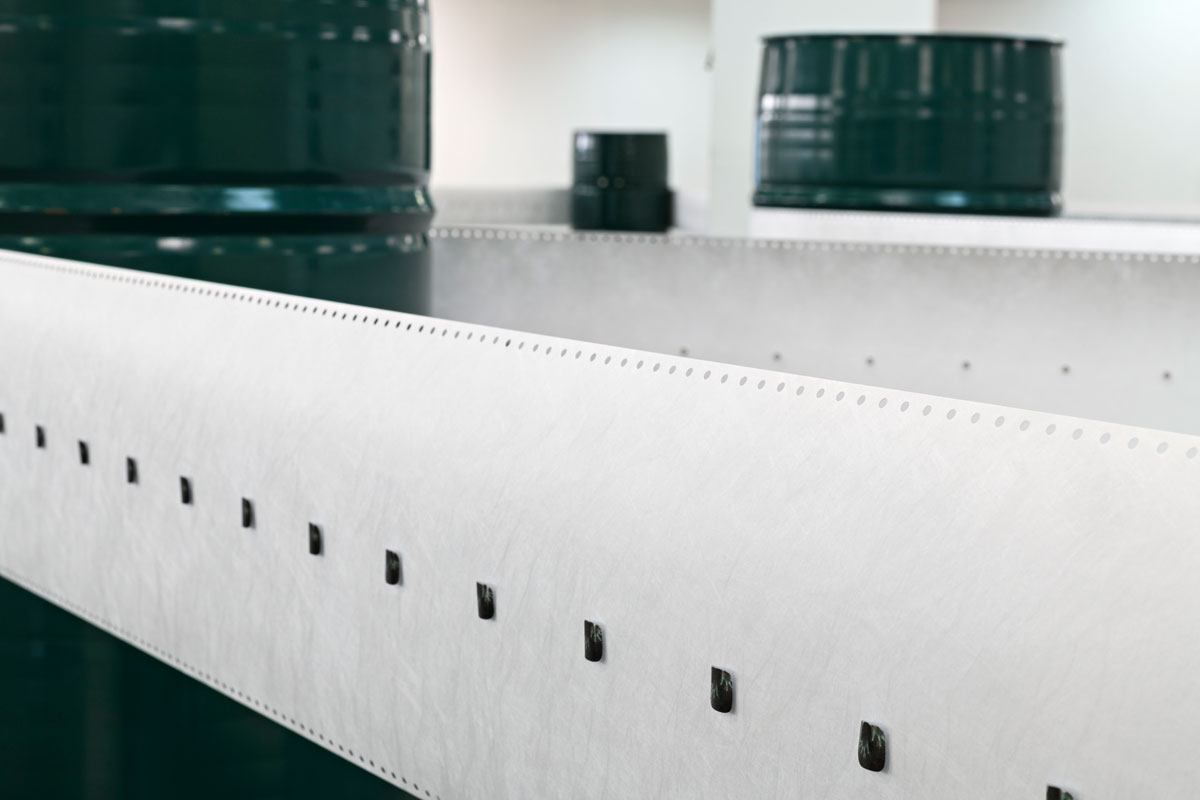
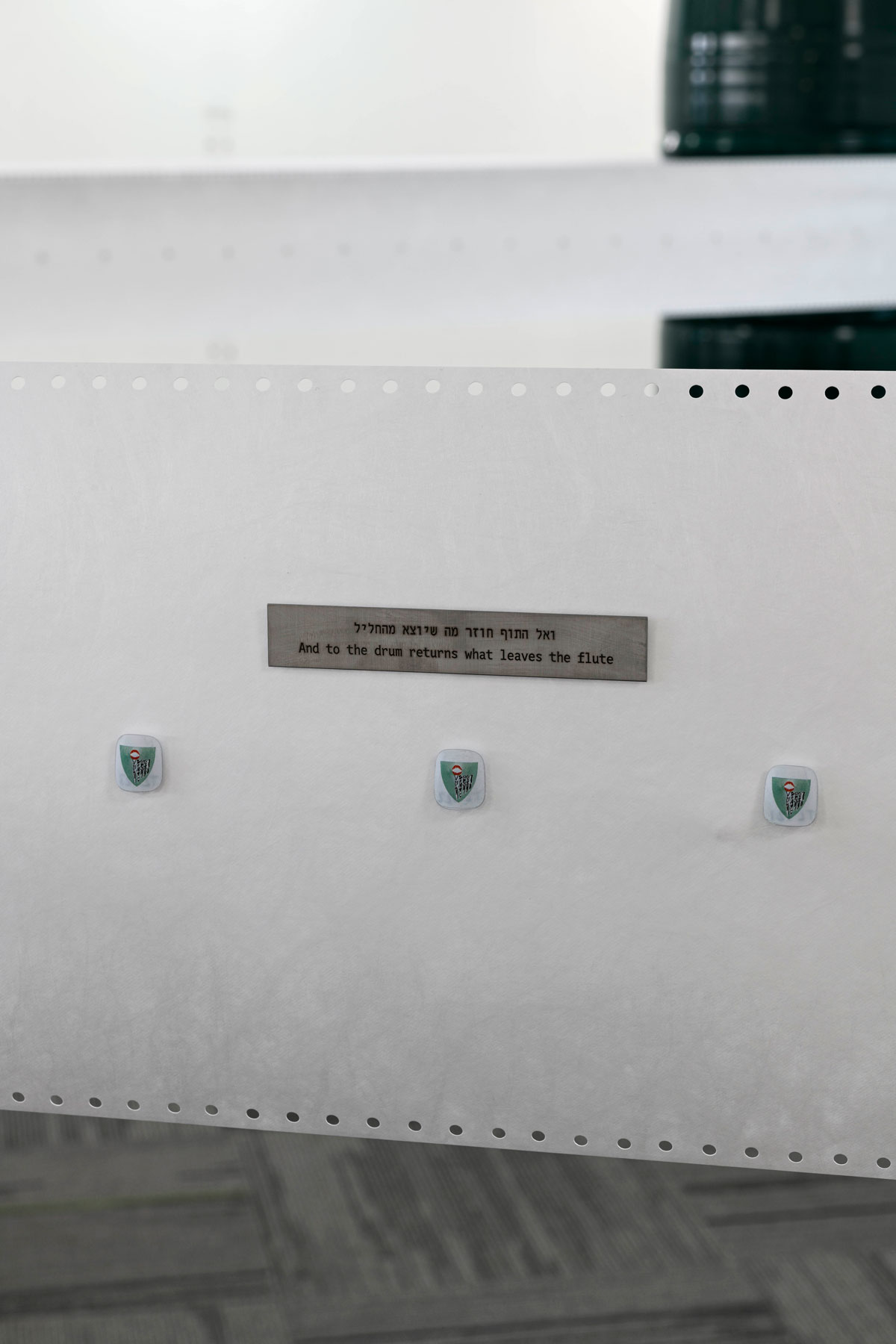
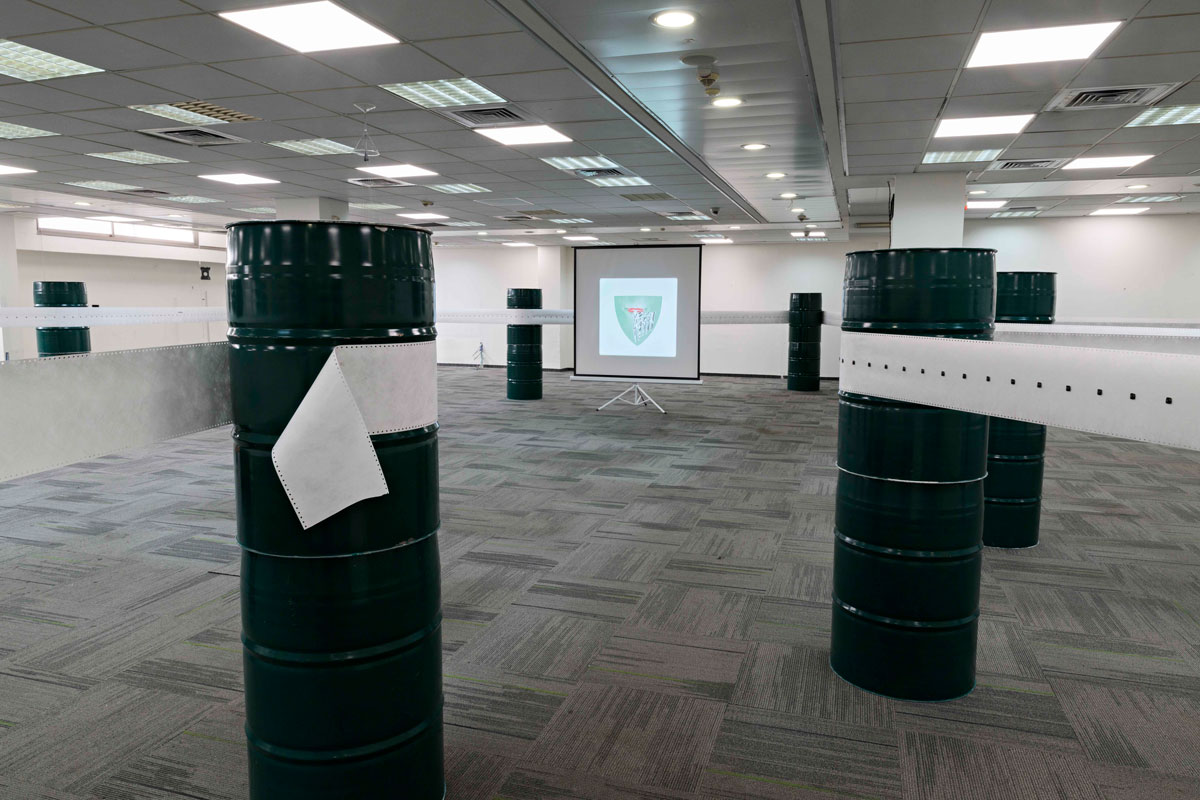
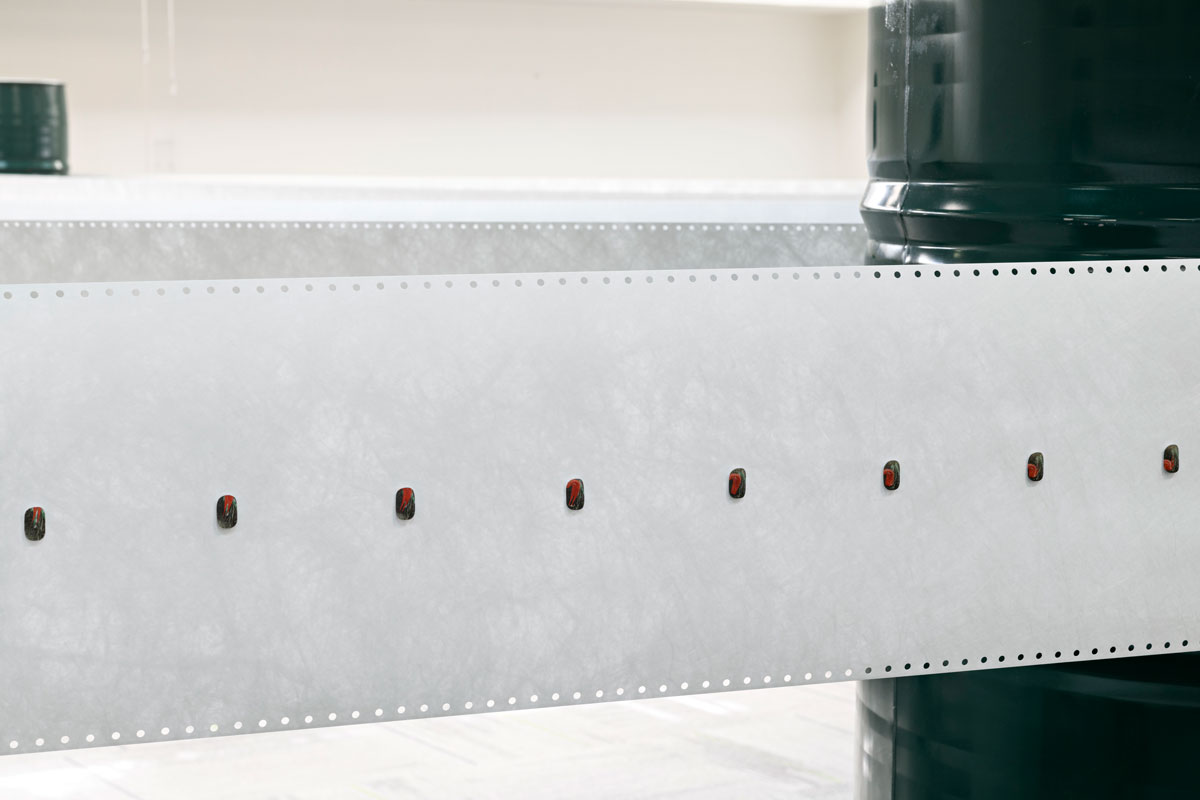
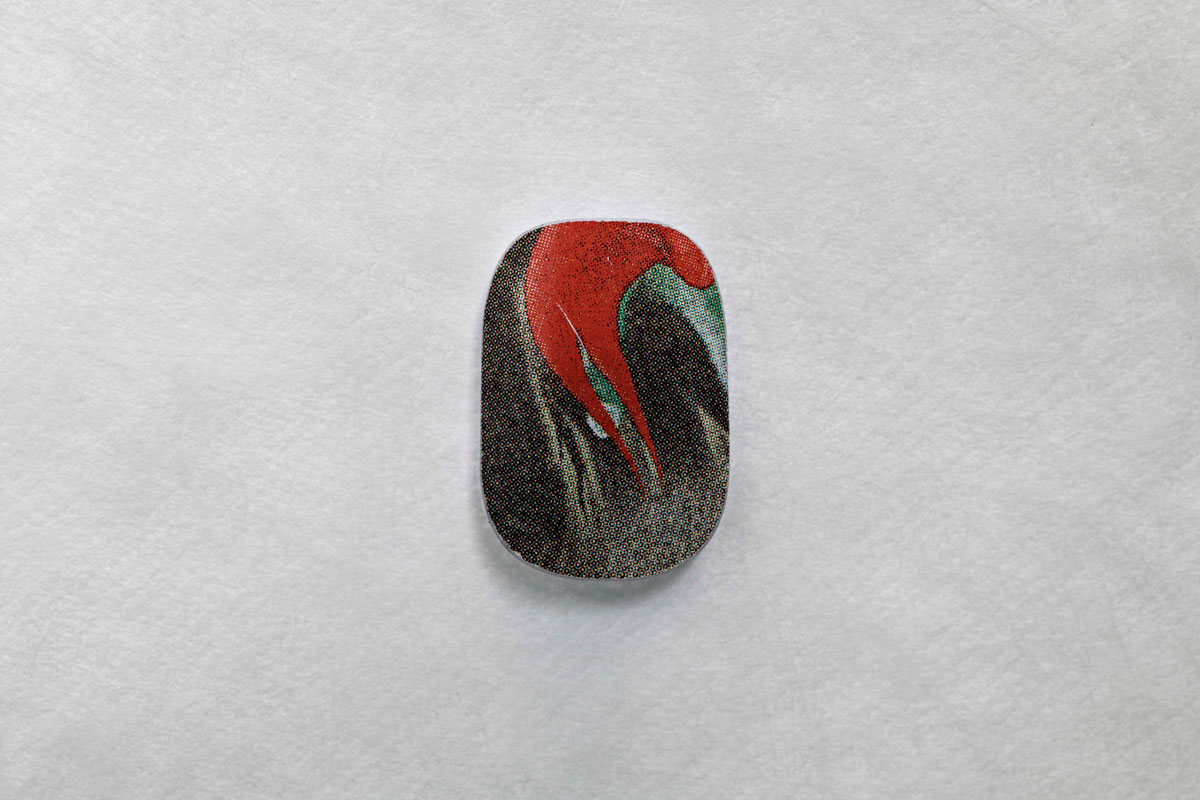
Rumor is presented in an extra-institutional space, in a setting stimulated rather than deterred by challenge, under material, formal, and operational conditions that are fleeting yet irreplaceable. The exhibition comprises 871 paintings, created one by one on a computer, printed, and processed into artificial nails, the size of my teenage daughter’s fingers—small enough to make the space around them look larger—as well as an animated film composed of the sequence of paintings. The nails are attached by magnets to a 107-meter-long roll of printer paper, interlaced and stretched horizontally between columns made of green tin barrels, delimiting a star-shaped inner area.
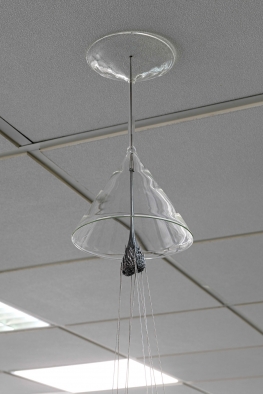
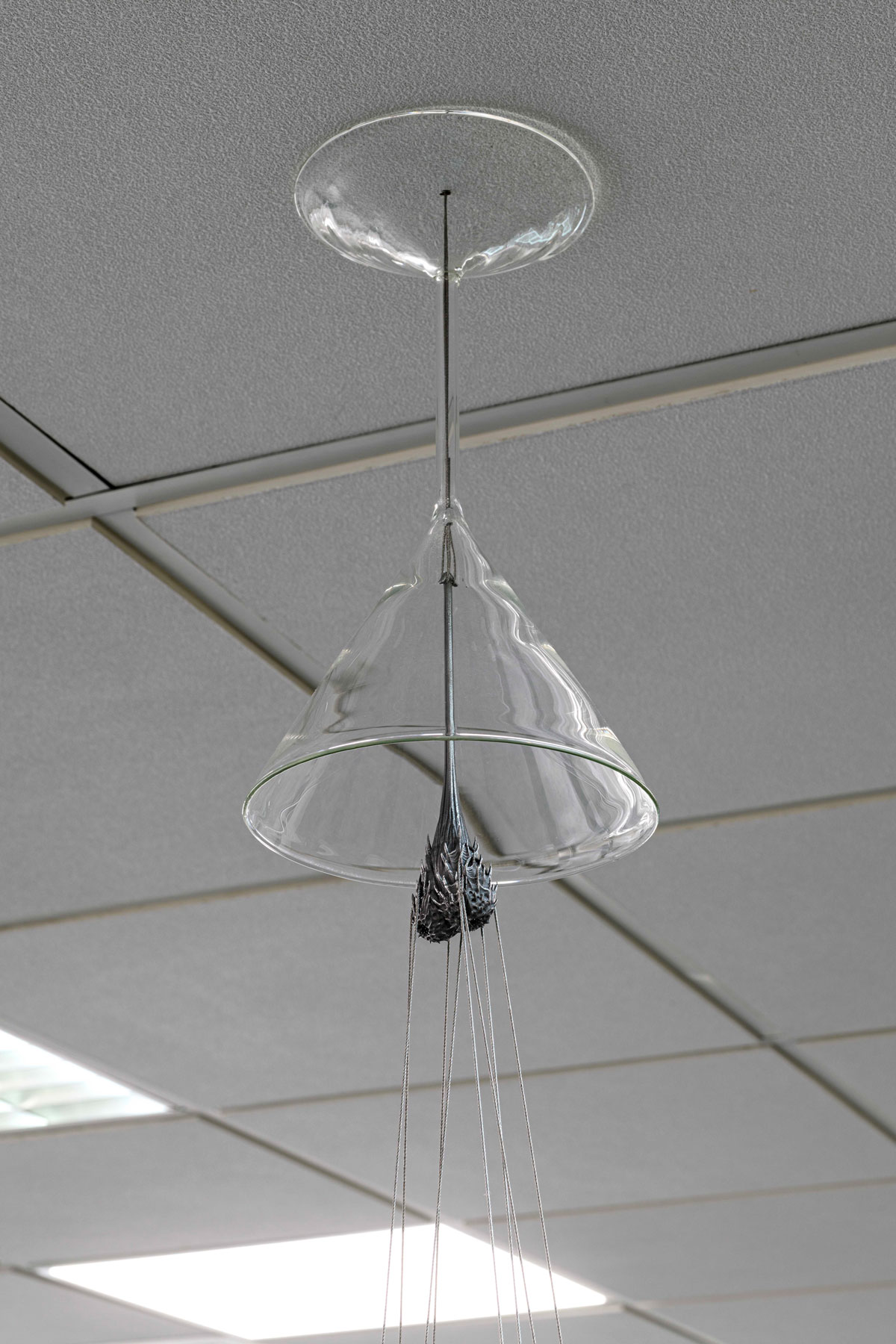
In the center of the space, a large martini glass, inverted like a bell, is attached to the ceiling. Inside it hangs a steel clapper, whose thorny shape originates from a snake’s genitalia, from which the film’s heavy projection equipment is suspended.
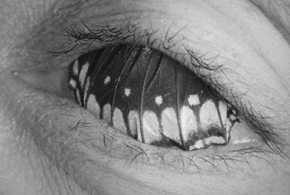
The film shows a forked red tongue, unearthing from ashes two big toes and ten fingers, all green.
Their exposure via licking reveals the form of a shield, containing an image partly rendered in Arabic calligraphy, on each. The sequence of exposures lays bare the text.
The toenails bear images of lips, blowing into a calligraphy-rendered five-pipe pan flute, as the number of toes on a foot. Blowing into it causes ash to be emitted from the flute, ash to be emitted from the flute, filling and sealing the area of the shield.
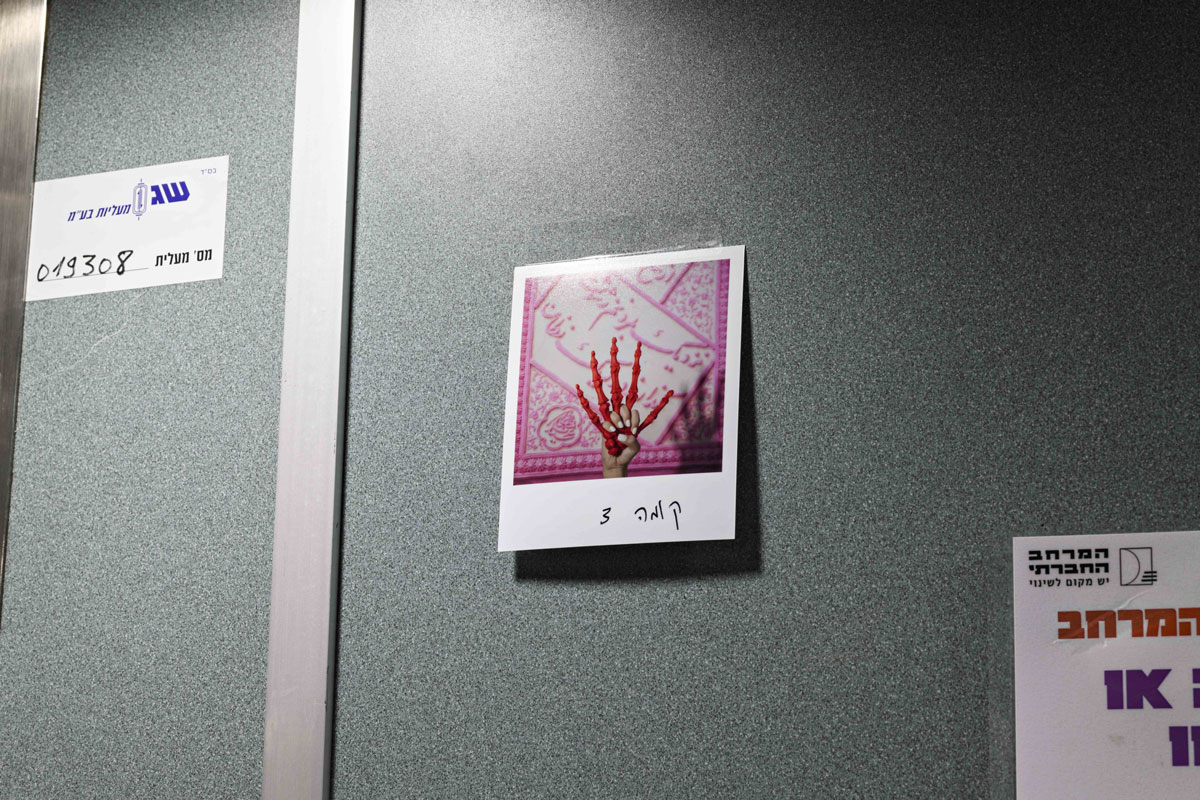
The ten fingernails bear calligraphic depictions of finger bones, positioned before lips in a gesture of silencing (shhhh). Here too, each nail carries a different text: one line per nail, two verses across both hands.
The film appears like a series of variations on an animated logo intro.
To avoid redundancy between the paintings and the film, the Hebrew and English versions of the calligraphic text appear within the sequence of nails on the paper sheet in the form of laser-engraved metal tags. Since the text does not appear in the film itself, viewing the paintings and watching the film become mutually dependent. The viewer needs the film to perceive the whole, of which the paintings are fragments, and needs the paintings to know what is inscribed. To read the poem, the viewer must walk along the paper sheet. The time that elapses between reading one line and the next becomes a test of both patience and memory.
The calligraphy was executed by hand by calligrapher Josh Berer (a student of Mohamed Zakariya, widely regarded as the father of the American school of Islamic calligraphy). It functions as an “ideal compromise” between text intended for reading and figurative painting—in this case, pan flutes and finger skeletons. Due to its near illegibility, calligraphy rewards non-speakers of the language as much as it discriminates against its speakers.
The poem, whose style imitates an old proverb, is a misanthropic call whose speaker directs at herself: to survive all groups to which she belongs.
This call also underlies the repeated use of Arabic, which seeks to see it delivered from the victim’s pride of its speakers as well as from the patronizing caution of its left-wing outsiders, just as the viewers of Rumor must extricate themselves from all forms of choirs that “political art” typically preaches.
All the cycles of exclusion from which Rumor is composed: its extra-institutional status, which limits the exhibition’s exposure; the paintings’ tininess, which tires one’s eyes; their multiplicity, which erodes patience; the interrupted slowness of reading; the discriminating foreignness of the language; and its strangeness within calligraphy—all protect against the possibility of its being readily accessible, as if it were a secret. Hence its title.
Rumor is the desire of a community, gathering around a sharing protected from sharing.
Uri Nir, January 2026